Athletic field maintenance demands specialized agronomy, safety standards, and scheduling discipline. Many people are surprised to find out just how much more goes into sports fields than regular commercial lawn care. Yellowstone Landscape has dedicated teams for this specialized service.
Our experience will give you a better understanding of all the details that make maintaining athletic fields a unique challenge. We’re sharing with you a Q & A session with a Yellowstone Sports Field Specialist and five different tables with easy-to-digest information.
Other topics include:
- Routine Services
- Fertilization & Soil Health Programs
- Aeration & Compaction Management
- Overseeding & Turf Renovation
- Irrigation System Management
- Weed, Disease & Pest Management
- Field Safety, Playability & Compliance
- Seasonal & Event-Based Services
Routine Sports Turf Maintenance Services
Yellowstone Landscape is the top sports turf company. So, we can break down baseline sports turf services you need to know about. It starts with precision mowing, which includes sharp blades, well-maintained mower decks, and striping.
Mowing is also how ideal turf height for each sport is maintained alongside careful timing. Proper grass height balances safety, good footing, and sports field playability. What about edging?
Edging and perimeter control is the technique used around areas you want to keep grass from creeping onto. It’s about aesthetics and preventing tripping hazards.
Those spaces include:
- Infields
- Warning tracks
- Sidewalks
- Fences
As for litter removal, how would the finest athletic field in the world look if plastic bottles were lying around? Even the lush turf of Wembley Stadium would be cast in a bad light without the core service of debris management. This can even include cleaning up after a team celebration.
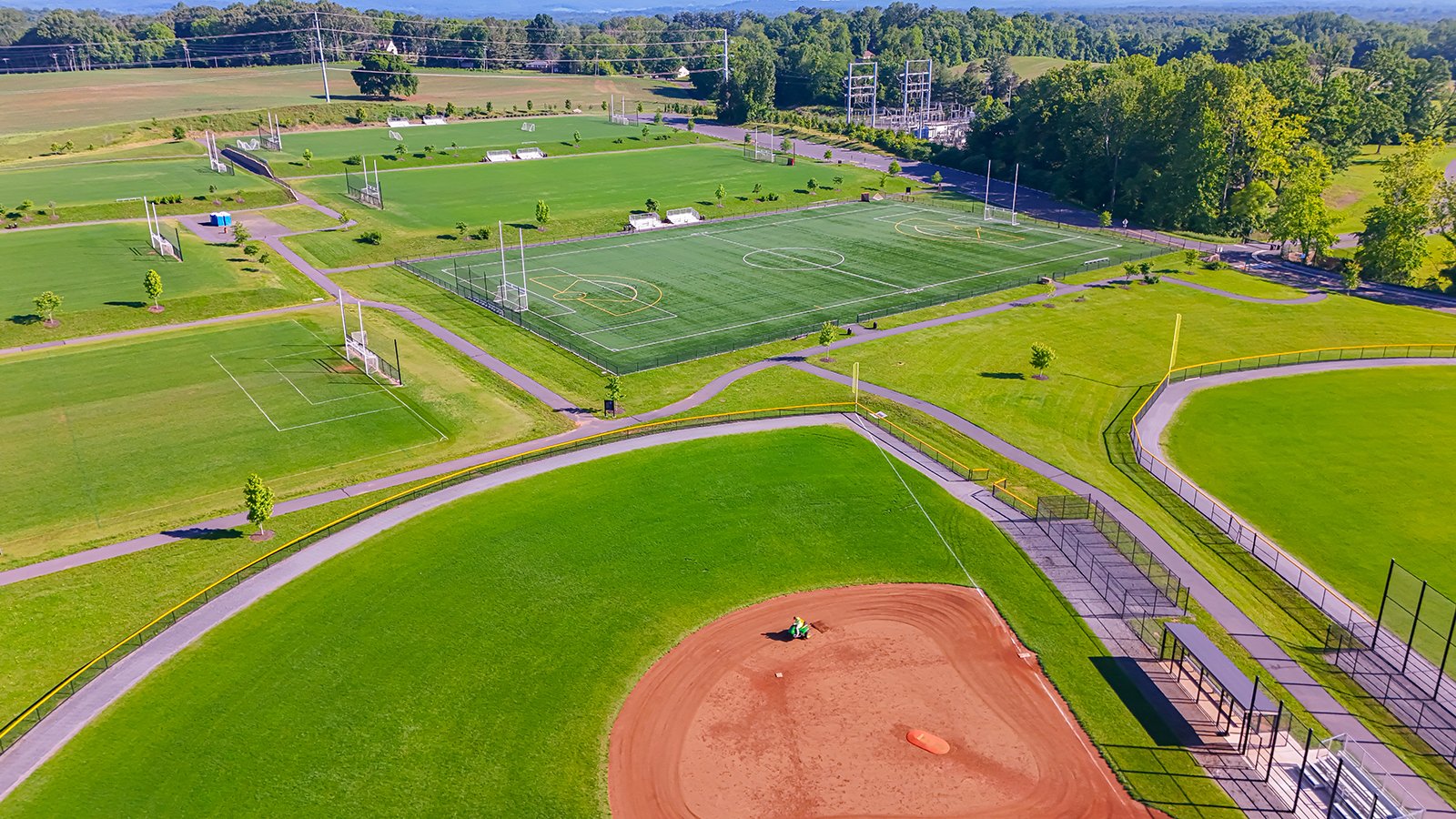
Fertilization and Soil Health Programs
Many people outside the landscape world are intrigued by how much science is involved with producing great-looking sports fields. But that thick turf that holds up through football and soccer season can only happen when the soil feeds the grass roots properly.
Soil tests and nutrient analysis provide insights on any necessary pH adjustments needed for the soil. These analyses show which nutrients are missing. Tests should be done at least once per year, and more often on heavily used fields.
Only after professional soil testing can your sports turf fertilization programs be determined. Your provider can then set yearly targets for the following nutrients:
- Phosphorus
- Potassium
- Calcium
- Magnesium
The fertilization schedule should also be informed by real-time weather and which sport is in season. Light applications done regularly are the proven path to steady sports turf growth and resilience.
There’s a reason experienced landscape firms rely mostly on slow-release fertilizers. One, it helps prevent “burning” the grass. Two, this technique helps avoid surge growth, which can make it tough to get the turf height right for the games. Three, slow-release fertilizers are less likely to run off the field and into our precious waterways.
Is there a place for faster-release fertilizer applications? Yes — to green up the field right before a new season, recover after heavy play (tournaments), or if there’s an acute deficiency.
Organic or Sustainable Options
Using sustainable sports turf fertilization programs is a good goal for being planet-friendly. Carbon-based products made from soybean or feather meal are organic examples. They can work well when guided by professional soil testing combined with proven cultural practices such as:
- Core aeration
- Compost topdressing
- Biodiverse plantings in the area
All three can improve the soil structure beneath your sports turf and increase microbial life that can reduce fertilizer use long-term.
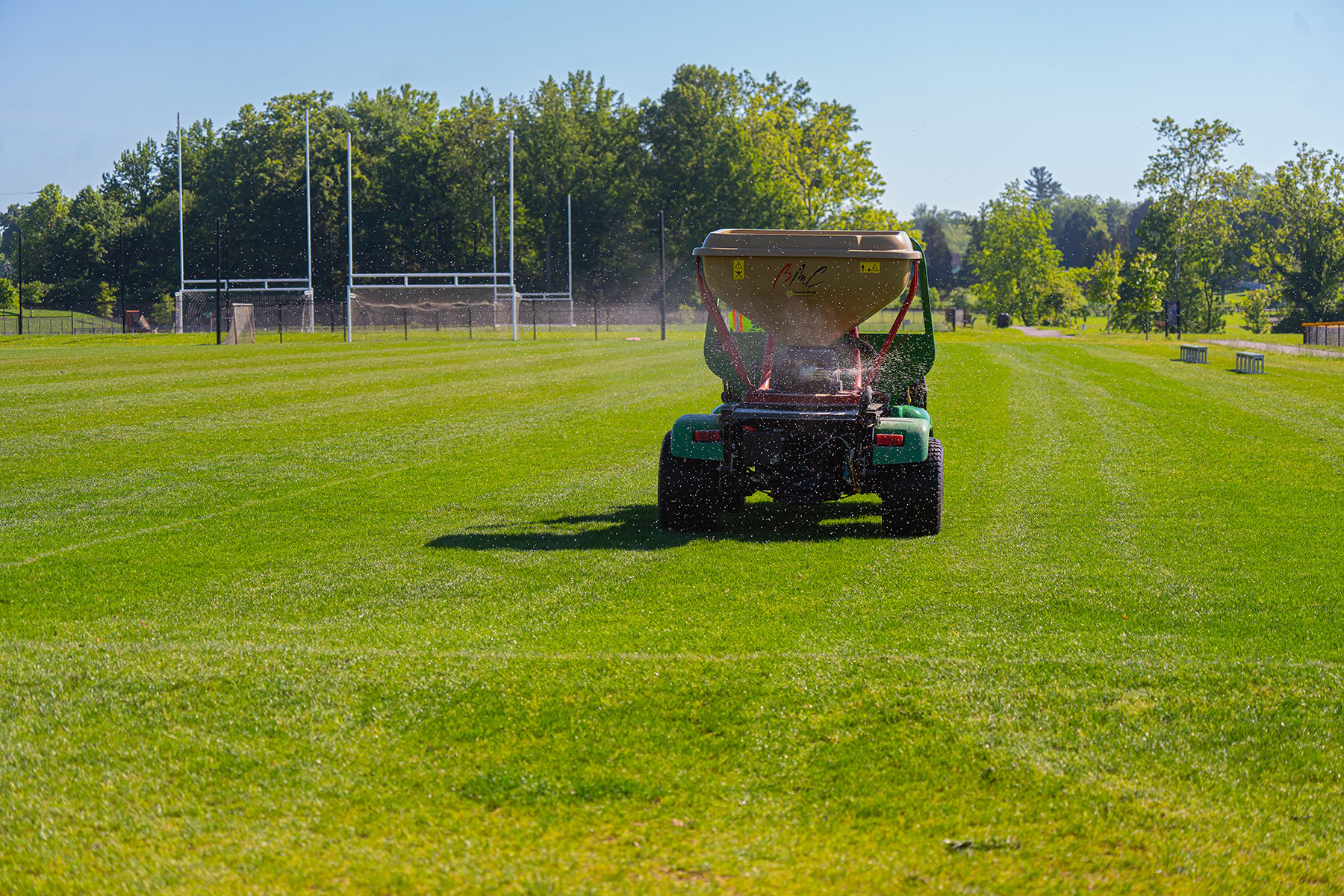
Aeration and Compaction Management
The table below gives you an easy breakdown of turf aeration for sports fields and how it combats soil compaction.
|
Service |
Key Focus |
|
Core aeration |
Relieve surface compaction |
|
Deep-tine aeration |
Break deeper hardpan layers |
|
Seasonal timing |
Schedule around peak growth & games |
|
In-season venting (solid-tine) |
Light, low-disruption aeration |
|
Topdressing after aeration |
Smooth surface, improve drainage |
|
Overseeding high-wear areas |
Speed recovery, boost density |
|
Communication with coaches/directors |
Set expectations, minimize conflicts |
|
Player safety & performance outcome |
Stable footing, more consistent turf |
More details on the table information are below.
What aeration does for athletic fields: It helps prevent soil compaction that hurts grass roots’ growth by repelling air and water. This makes your turf unhealthy and creates a harder, more hazardous playing surface.
Core aeration specifics: Hollow-tines on the aerator pull plugs from the sports field. The plugs will have turf on top with soil beneath each plug. Pulling plugs via core aeration is extra-beneficial for high-traffic areas of the field.
Deep-tine aeration: These machines penetrate the soil from six to ten inches deep with long tines designed for older, inherently hard fields. The extra depth can lead to improved root health and player-friendly turf.
Seasonal timing: The calendar matters, but so do real-time growing periods affected by weather. Spring and fall are general timelines for aerating cool-season grasses. For warm-season turf, late spring and summer are more ideal. Lighter “venting” with solid tines can be done more often since this leaves less top surface mess.
Recovery: Fields benefit even more after aeration when dragging is performed to smooth the surface. Topdressing and overseeding go well with aeration in the right conditions and timing. Timing has to be discussed with athletic directors and recreation department officials.
Overseeding and Turf Renovation
Just like athletes need weight lifting and rest days, athletic fields require healthy routines and recovery protocols. Overseeding and turf renovation help ensure playing fields are safe, playable, and healthy. Sports turf takes a pounding, so recovery planning lets it bounce back while enhancing longevity.
Is there a difference between cool-season and warm-season grasses with this process? Absolutely. Cool-season overseeding is used to thicken or repair fields with bluegrass, rye, or fescue. The overseeding is done when the soil temperature is primed for fast germination (spring and fall).
The flip side of warm-season overseeding sees ryegrass seeded into bermuda or zoysia. This adds color and coverage for cold months until the main turf begins growing the following spring.
Areas that get the worst trampling and often need zone repairs are:
- Goal openings
- Between hashmarks
- Center circle
- Bench areas
- Sideline entry points
These zones can become even more tattered during heavy rains. To recover, they may require slit-seeding, heavier seeding rates, and additional overseeding sessions.
Seed Selection
Climate is the main decision-maker with athletic field seed choices. Heat, cold, local disease patterns, and watering constraints come into play. But each grass type has certain strengths as seen below.
|
Turf Type |
Best For |
Notes |
|
Perennial ryegrass |
Quick color, fast wear recovery |
Germinates very quickly |
|
Kentucky bluegrass |
Spreading recovery, divot repair |
Strong rhizomes, good density |
|
Tall fescue |
Drought tolerance, deep rooting |
Handles heat, lower irrigation |
|
Bermudagrass |
High wear, summer play |
Warm-season, aggressive recuperation |
|
Zoysiagrass |
Heat tolerance, lower inputs |
Dense, slow-growing warm-season turf |
Your athletic field maintenance provider should guide you on the right grass type for the fields’ usage.
Questions they should ask you include:
- Which sports are played on the fields?
- How many teams?
- Are tournaments hosted on your fields?
- Any budget or staffing limits for maintaining the grass at a quality level?
Germination and Grow-In
Good results from overseeding depend on a few factors. You want good seed-to-soil contact, consistent moisture, and protection from foot and equipment traffic during germination. As the seeds evolve during the grow-in period, small grass blades appear, and irrigation can be gradually reduced.
As the grass becomes mature, your provider will begin mowing at correct heights (shown below). Athletic play should only start, however, once the turf is dense and roots are hardy.
|
Turf Type |
Typical Athletic Field Mowing Height (inches) |
|
Perennial ryegrass |
1.5 – 2.5 |
|
Kentucky bluegrass |
1.5 – 2.5 |
|
Tall fescue |
2.0 – 3.0 |
|
Bermudagrass |
0.75 – 1.5 (heavily managed) |
|
Zoysiagrass |
1.0 – 2.0 |
Irrigation System Management
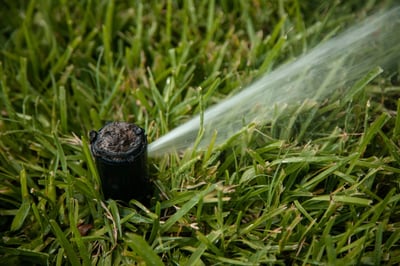
Proper athletic field irrigation management is a must, whether at a college campus or local recreation department. But the quality of your field’s performance is directly connected to your irrigation system.
What can derail irrigation efforts if seasonal inspections are not thorough?
- Water pressure issues
- Sprinkler head rotation problems
- Clogged nozzles
- Misaligned heads
- Wiring damage
- Controller set-up doesn’t match changing weather
Along with seasonal check-ups, coverage audits should be performed regularly so water is evenly distributed. These audits inform providers’ adjustments for things such as arc patterns and run times.
These efforts are made simpler by today’s smart controller programming that sets runtimes based on the season, soil quality, and turf type. And with up-to-the-minute weather data and ET-based sprinkler scheduling, the irrigation is working with live conditions vs. theoretical conditions.
To prevent water waste and damage to your sports turf, the following must be monitored:
- Soggy areas (or pooling)
- Water usage spikes
- Pressure drops
Upgrading to smart irrigation systems does much of the monitoring through automation while making the watering highly efficient.
Weed, Disease and Pest Management
As you can see in the table below, proactive protection against weeds, pests, and disease is your sports fields’ shield.
|
Service |
Purpose |
What It Includes |
|
Integrated Pest Management (IPM) |
Keep pests below damaging levels proactively |
Cultural practices first, spot treatments, defined thresholds |
|
Preventative fungicide programs |
Protect turf during high-risk periods |
Scheduled applications by weather/disease risk, product rotation |
|
Weed control for play surfaces |
Preserve safe, uniform, dense turf |
Pre-emergent barriers, targeted post-emergent applications |
|
Monitoring & early detection |
Catch problems while they’re small |
Routine scouting, records/photos, early-response adjustments |
Another layer of foundational protection from pests and disease is Yellowstone Landscape’s comprehensive landscape maintenance. When turf is healthy and strong, it’s much less susceptible to harmful insects and diseases.
Field Safety, Playability, and Compliance
Every school and community wants its athletic fields to have all-star aesthetics. A nice-looking field must be safe, playable, and compliant too, though. Again, comprehensive programs are the key. Healthy turf looks good and players can perform their best, safely.
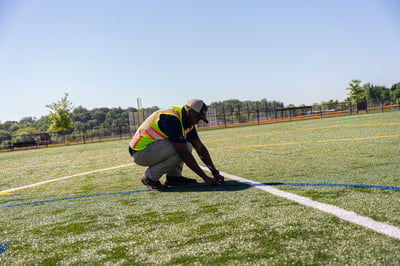
At the top of the list for safety is using tools like Clegg hammers to measure the fields’ hardness. These tools help providers determine which athletic field maintenance services are urgently needed (e.g., aeration, topdressing, better moisture management).
Just as vital is keeping a check on the sports turf density. It should be thick and vibrant, with no bare soil or weeds cropping up. Problematic high-traffic areas are likely to need more attention and targeted overseeding, sod repair, or field closure in extreme cases.
What about drainage assessments? These can only be done during or right after rainfall or the irrigation system runs a normal cycle. The following should be checked and corrected quickly:
- Standing water
- Soft spots
- Overly wet or dry turf
Grading should be part of the assessments, as well as inlets, drains, and soil structure.
Event-readiness inspections happen reasonably close to a game’s opening whistle. Pre-event walkthroughs should catch and correct hazards like divots or exposed irrigation heads. You don’t want player or referee injuries — and a professional checklist ensures the field meets league regulations as well as your internal standards.
Seasonal and Event-Based Sports Turf Maintenance Services
When choosing an athletic field maintenance company, be sure to consider a partner that offers flexibility. At Yellowstone Landscape, our sports field clients know we’ll work with them on the following things that you can’t carve into stone on a calendar.
Tournament Preparation
The fields should look and feel ready for prime time with more eyes and feet on them. Quality providers aim for firm footing, uniformity, and a sharp look. Achieving this readiness involves mowing, striping, and targeted grooming.
Post-Event Recovery
Heavy activity and multiple teams on a field mean more damage, so a recovery plan is a must. Steps should include divot repair, aeration, overseeding, and irrigation adjustments for germination. Fast recovery may also include rolling, brushing, and light topdressing (restores smooth surface for good ball roll and safe footing).
Weather-Related Repairs
When Mother Nature hits your fields with heavy storms or extended droughts, the results have to be corrected. There may be ruts in need of filling or dry areas requiring soil amendments or turf replacement. Weather events may mean it’s time to adjust the irrigation settings and mowing heights, and even consider drainage upgrades.
Emergency Response
Some sports field issues are not natural or easy to foresee. Think vandalism, vehicle tracks, or frozen irrigation pipes. Even last-minute game scheduling changes can cause problems if your landscape team doesn’t have the resources to adjust their schedule on the fly.
.jpg?width=1800&height=1200&name=DSC07779%20(1).jpg)
Why Hire Yellowstone Landscape for Sports Turf Maintenance?
Sports field management can be as stressful as a ninth inning with the score tied. But with standardized maintenance systems, Yellowstone Landscape removes the guesswork and worries of keeping your sports turf healthy and resilient.
With Yellowstone, you get:
- Consistent field performance 365 days a year
- Trained crews and calibrated equipment
- Reduced long-term repair costs through proactive turf management
- Small problems caught early and fixed before they balloon
- Regular safety checks and surface hardness monitoring
- Professional mowing patterns, striping, and grass color management
We provide clients with proven turf care plans customized to fit your exact game schedules, practices, and tournaments. If you like clear reporting and communication from one accountable partner, then contact Yellowstone Landscape today for a sports field consultation.
Q & A with a Yellowstone Sports Field Specialist
What problems do clients face when turf care is handled in-house?
Tight staffing, limited equipment, and irregular cultural practices, which lead to compaction, thin turf, unsafe spots, etc.
How does professional management extend field lifespan?
It extends field lifespan by sticking to a true agronomic plan. Regular aeration, topdressing, correct fertilization, drainage fixes, and repairs that keep the surface attractive and healthy.
What ROI do clients often overlook?
Fewer cancellations and injuries, longer replacement cycles, and the way a consistently high-quality field quietly boosts their brand, recruiting, and community pride.