Springtime gives arborists the clearest view of trees and potential problems that they'll get all year. That’s because before leaves come back fully, the branch structure is exposed, defects are visible, and winter damage is easier to read.
After the tree canopy fills in, that window for the most thorough tree inspections closes.
For commercial properties, the stakes are pretty straightforward. Trees located near parking lots, walkways, and building entries carry serious liability. Storm damage that goes unaddressed can become an emergency situation. Diseases that are caught too late can unfortunately lead to a tree needing to be removed.
That’s why commercial tree inspections are an investment in your most valuable landscaping elements. Here's what a professional spring assessment covers and why waiting on summer can be a mistake.
Need to book a tree inspection today? Schedule now.
Why Spring (and Not Summer) Is the Right Time
Spring gives Yellowstone Landscape’s arborists an ideal view of the trees they’re charged with maintaining. Before full leaf-out, branch structure is exposed and more readable. Once the canopy fills in, deadwood, defects, and stress points are often camouflaged by foliage.
That visibility issue is critical because:
- Structural defects caught in spring can often be pruned or braced. If missed until summer, the same defect may require full removal.
- Disease identified early is usually treatable. Left until symptoms are obvious, some trees can't be saved.
- Winter damage assessed in spring gets addressed on a planned schedule. After a storm, it becomes an emergency.
Spring intervention is vital because dead limbs dangling over parking lots, walkways, and building entries are serious liability risks. As you know, summer storms often show up with little warning. So, if a limb falls on a car, tenant, or visitor, questions would arise about why nothing was done about it.
Urban tree failures caused 407 human fatalities in the United States during a 12-year period. ~USDA
What Arborists Look for During a Spring Tree Assessment
A professional spring assessment should include the following five factors that determine whether a tree is a healthy asset or a hazard.
#1 Structural Integrity
The most common structural defect on commercial properties is the V-shaped co-dominant stem (two trunks competing from a single weak attachment point that splits due to wind or ice). A tree that has developed a new lean since last season is another problem. Sudden tree lean can mean root failure. And cracked soil or heaving near the root zone often confirms this.
#2 Tree Disease and Pest Damage
Early indicators include cankers, sunken bark, and discoloration. Fungal growth at the base can reveal internal decay that won't show on the outside until the tree’s already compromised. Boring insects leave exit holes near the trunk. Regional tree threats vary:
- Emerald ash borer has spread into Texas, where related costs could add up to billions of dollars.
- Beech leaf disease originated in northeastern Ohio, making the state the epicenter of this destructive forest disease. A 2025 study by The Holden Arboretum found 30% of American beech trees near the outbreak's origin have already been killed.
- Laurel wilt in Florida can move from infection to tree death in as little as four to eight weeks.
#3 Winter Damage
Hanging or partially attached branches are an immediate post-winter hazard. Frost cracks run vertically along the trunk and often look superficial while penetrating deep enough to invite disease and structural failure. Properties near roads and parking lots in northern states may also show salt spray damage.
#4 Deadwood and Crown Condition
High deadwood percentage is a liability and a health indicator as it can point to root problems, disease, or long-term decline. Crossing and rubbing branches create open wounds that invite harmful insects and fungi. Crown dieback isolated to one side usually indicates a localized issue, while widespread dieback can reveal the whole tree’s at risk.
#5 Root and Soil Health
Trees decline without a good foundation, as the following points highlight.
- Girdling roots wrap around the trunk and strangle the vascular system (invisible until major damage has already happened).
- Compacted soil from foot traffic, equipment, and vehicle parking suffocates roots and reduces water infiltration.
- Mulch piled against a tree trunk traps moisture and invites rot (these “mulch volcanoes” are a common but preventable mistake on commercial properties).
Which Trees Need Extra Attention in Spring?
A few categories of tree species deserve a closer look before the spring season slips away.
Trees that showed signs of stress last year (e.g., thin canopy, early leaf drop, wilting, off-color foliage) are usually starting the season behind the eight ball. Fortunately, spring gives you the perfect window for your tree care provider to take action before that stress compounds.
Next are newly planted trees. Because they’re still establishing root systems, these trees are vulnerable to drought stress, root disturbance, and transplant shock. The worst part? Symptoms can look like normal adjustments until major damage is already done.
Large trees near buildings, parking structures, and high-traffic areas are the most hazardous. Their size means more weight, reach, and potential for damage or injury if a limb falls.
Several species warrant specific attention:
- Sycamore: Highly prone to anthracnose, a fungal disease that thrives in cool, wet spring conditions.
- Dogwood: Thin bark makes dogwoods unusually vulnerable to mechanical damage from mowers and trimmers, and any wound becomes an open door for borers and disease. Spring also brings powdery mildew, spot anthracnose, and petal blight.
- Cherry: Ornamental cherries are finicky about planting conditions (e.g., too much mulch, compacted soil, poor drainage), which can stress the tree before symptoms are visible. Fungal diseases like cherry leaf spot overwinter in fallen debris and hit hard in spring when spores spread faster.
Commercial arborists in Houston, TX, note that cuts during oak wilt season are a direct invitation for beetles that carry harmful fungus between trees.
Steps After a Spring Tree Inspection
The commercial tree inspection is the right starting point. Afterward, every flagged item will fall into one of two categories:
- Urgent
- Monitor
Urgent items require action before the next storm, before foot traffic resumes, or before active disease spreads to neighboring trees. Monitor entails documenting the issue, tracking, and reassessing at the next service visit.
Common follow-up commercial tree services include:
- Crown pruning to remove deadwood and improve structure
- Cabling and bracing for co-dominant stems or heavy lateral limbs
- Targeted treatment for pests or diseases
- Deep root fertilization to address compacted soils and nutrient deficiencies (one of the most overlooked tree services on high-traffic sites)
A solid assessment report documents every flagged tree by location, condition, priority, and recommended action. Communication is key, so your ISA certified arborist should be ready to answer any questions you have about the report.
While the assessment does act as a work order, it's also a valuable property record for when an insurance claim needs supporting documentation or when ownership changes.
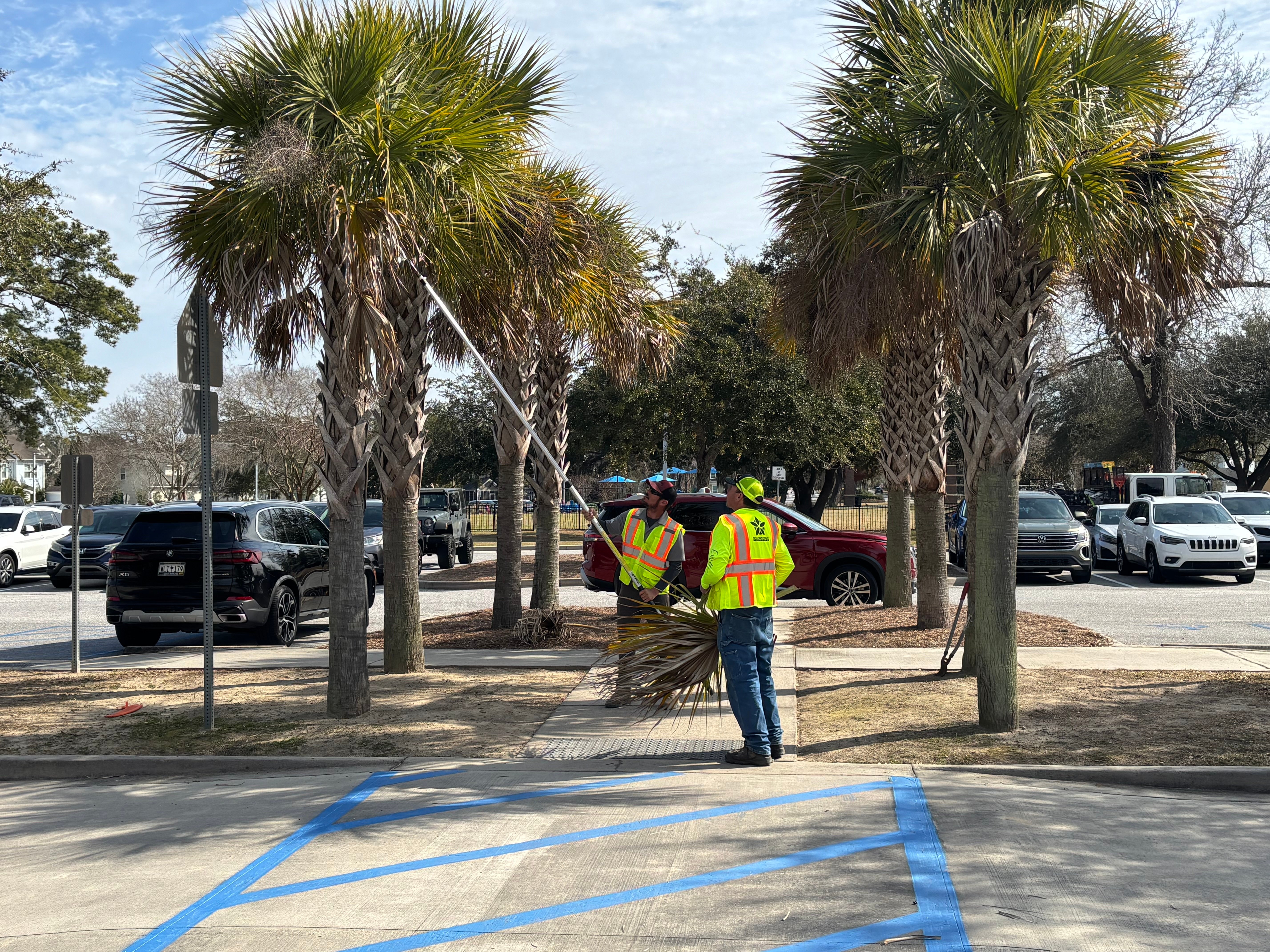
DIY vs. Professional Assessment
Property managers are wise to do basic property walkthroughs. There are tree-related issues that a non-specialist can spot, such as:
- Hanging or partially attached branches
- Obvious tree lean
- Mushrooms or fungal growth at the base
- Visible bark damage or discoloration
What can’t be managed by those untrained in arbor care? Disease identification, structural defect assessment, and root zone evaluation. Those go deeper, requiring training and hands-on experience that a general property walkthrough can't replace.
Oftentimes, the real liability risks aren’t things that are obvious. It's what looks fine until heavy winds reveal the issue, or disease spreads to more than one tree.
When hiring a tree care professional for your commercial property, look for the ISA Certified Arborist credential. It's the industry standard, confirming the person assessing your trees has passed rigorous exams and stays current with continuing education.
ISA Certified Arborist candidates must pass a 200-question exam covering 10 domains of tree care.
A professional arborist is fully trained to assess risk, identify pathogens, and make recommendations that hold up if a tree failure ever becomes a legal matter. Arborists are valuable at every stage of tree care, from species selection to installation to maintaining mature trees. That’s why Yellowstone Landscape uses in-house arborists.

Conclusion
Spring is a narrow window, as you already know. But what you catch now helps shape the entire growing season. And the biggest benefit comes with the tree issues that can be managed versus allowing them to fester into an emergency down the line.
Yellowstone Landscape's commercial tree care teams are conducting spring assessments across all our service areas. Every assessment is performed by ISA Certified Arborists who document findings, prioritize action, and give you a clear picture of your trees and how their condition is affecting the rest of your landscape.
Schedule a tree assessment with Yellowstone today.
FAQ Commercial Tree Care
When is the best time to inspect trees?
Early spring is the ideal window. Canopy structure, deadwood, and defects are fully visible without full foliage in the way, and you still have time to act before the growing season kicks in and existing problems grow.
What does a commercial tree inspection include?
A thorough inspection covers structural integrity, canopy and crown condition, signs of pest or disease activity, winter damage, and root zone health. A certified arborist should be the one documenting the detailed findings.
Can a property manager do a tree inspection themselves?
They can handle a basic visual walkthrough to spot hanging limbs, obvious tree lean, or exterior bark damage. But structural defects, disease identification, and root zone trouble require a certified arborist.
Q & A with a Yellowstone Landscape Manager
What does a spring tree assessment look like with Yellowstone Landscape on a commercial property?
Our certified arborists walk your full property after winter dormancy, evaluating canopy structure, bark integrity, root zone health, and early stress indicators before they become bigger problems. We look at how your trees interact with everything around them (e.g., irrigation, hardscape, turf, foot traffic).
How do you prioritize what gets flagged with tree inspections?
Safety comes first. Dead limbs over walkways, parking lots, or buildings get flagged as urgent regardless of season. After that, we prioritize by risk level. Cosmetic or low-risk items go into a maintenance queue so you can plan accordingly.
What are the most common things property managers miss during their own walkthroughs that your arborists routinely catch?
Most property managers tend to look up, while our certified arborists start at the root zone, where early signs of girdling roots, soil compaction, and fungal activity show up first. Arborists also spot canopy dieback patterns and subtle lean changes.
Are there regional differences in what you're inspecting for with commercial tree care?
Yes. In the Southeast, we're watching for laurel wilt, bacterial leaf scorch, and storm damage vulnerability during hurricane season. In the Southwest and Texas markets, drought stress and root zone moisture retention are top priorities. Our arborists are trained on region-specific pest and disease threats.
How does Yellowstone Landscape's approach to spring tree inspections differ from a standalone tree service?
A standalone tree company typically shows up for a specific job and then leaves afterward. Our arborists are part of a comprehensive landscape team that already knows your property and the plant inventory. That relationship helps us catch trends over time.
What does your written assessment report include?
The report documents each flagged tree by location, condition, and recommended action. We include priority level so you can schedule the non-urgent commercial tree work to fit your budget cycle. Everything’s written in clear language so you can share it with ownership, the facilities team, or your HOA board.