We’ll jump right into the newest list of Yellowstone Landscape’s top 10 plants for South Texas. We included soil preferences, seasonal interest notes, a handy table of quick facts for each plant, and more.
#1. Hibiscus
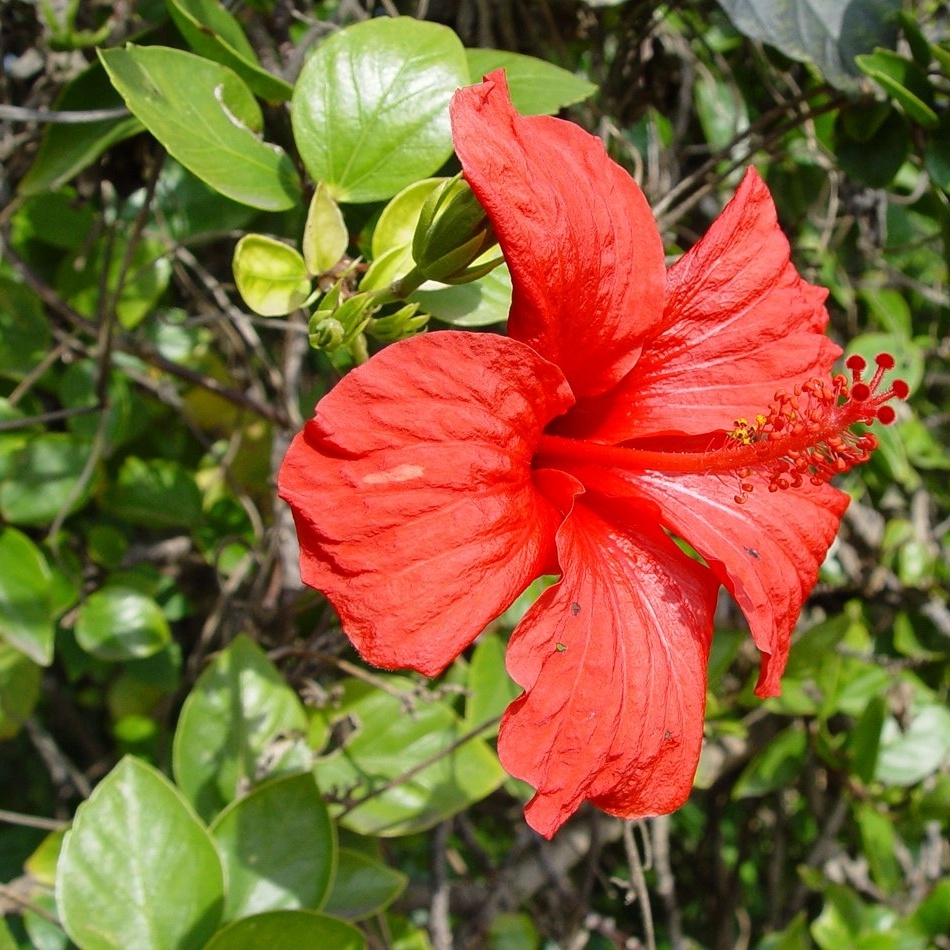
This plant is often the star of the show, known for brilliant red, star-shaped flowers. While this tropical plant is native to Asia, there is a cultivar (Texas Star Hibiscus) that’s native to the Southeast U.S. That variety delivers similar brilliance.
As for water usage, the hibiscus needs moderate-to-high water to look its best. It’s not considered a drought-tolerant plant. Since South Texas often sees intense heat, the hibiscus needs more frequent watering than if planted in cooler regions.
Hibiscus Soil Preference
Healthy growth and longevity come when this species is installed in well-drained soil. Soil with heavy soil contents will make it difficult to thrive since hibiscus roots need plenty of oxygen. Too much moisture robs the roots of air.
Sun Exposure and Seasonal Interest
It performs best with full sun to partial shade (peak blooms happen with at least six hours of direct sun). In South Texas, high temps may mean your property’s hibiscus plants could need a bit of extra shade. This is especially the case for container plantings.
You’ll get nice color from spring through fall. Daily blooms happen from late spring until the first truly cold weather hits at year’s end. Property owners enjoy having the amazing combination of constant new buds that evolve into bright, full blooms that last only one day.
Sustainability Benefits
The biggest sustainability factor is the heavy pollinator attraction. The flower’s shape is an ideal spot for hummingbirds and butterflies. And the nectar is long-lasting, meaning the pollinators have a steady food source during the blooming season. Having a hibiscus on the property immediately upgrades the biodiversity, which benefits other landscape features.
General Watering Schedule
- Establishment phase: Water deeply 2–3 times per week, ensuring moisture reaches 8–10 inches deep. Goal is to encourage deep root growth.
- Mature plants: Water 2 times per week during active growing season in South Texas heat. During peak summer or drought conditions, increase to every other day for container plants, which dry out faster.
Hibiscus Quick Facts
|
Key Point |
Detail |
|
|
1 |
Origin |
Native to tropical Asia, not Texas. Pair with H. coccineus for native ecosystem value. |
|
2 |
Sun & Soil |
Full sun (6+ hrs); rich, well-drained loamy soil. No standing water. |
|
3 |
Water Use |
Moderate-to-high. Best where irrigation is already in place. |
|
4 |
Pollinators |
Attracts hummingbirds and butterflies spring through fall. |
|
5 |
Planting & Care |
Plant mid-March to April. Water 2–3x/week to establish, 2x/week at maturity. High-potassium fertilizer in spring and mid-summer. |
#2. Esperanza
A native plant to South Texas, the esperanza’s natural range extends as far south as Argentina. Tecoma stans var. angustata is the most common variety in South Texas landscapes. Some cultivars are well-known due to their award-winning status, such as the Texas Superstar.
Water needs are low-to-moderate once established. The esperanza is a good go-to for drought- and heat-tolerance. One key threat is waterlogged soil, so your provider should note any poorly drained soil.
Esperanza Soil Preference
The plant is very adaptable, growing well in alkaline to slightly acidic soil. It can even overcome limestone-heavy soils common in parts of South Texas. Rich soil is ideal, of course, but not mandatory.
Sun Exposure and Seasonal Interest
Esperanza calls for full sun. Peak blooms will arrive with plenty of sunlight daily. Too much shade diminishes the flower production. Your landscape partner should be aware of this, especially if planted near entrance signage that produces shade.
Blooms happen from late spring through the first hard frost. So, with a mild South Texas winter, color can endure nearly all year.
Sustainability Benefits
Pollinators can’t resist the inviting trumpet-shaped flowers. Since the blooms are long-lasting in mild winters, pollinators have more incentive to visit more often.
General Watering Schedule
- Establishment phase: Water regularly every 7–10 days, allowing the soil to dry out between waterings to encourage deep root growth. A generous layer of mulch over the root zone retains moisture and insulates roots.
- Mature plants: Minimal supplemental irrigation needed in South Texas. During extended drought or extreme heat, one deep watering every 2 weeks is enough. Container plants dry out faster and need more attention.
Esperanza Quick Facts
|
Key Point |
Detail |
|
|
1 |
Origin |
True Texas native; range covers South, Central, and West Texas. |
|
2 |
Sun & Soil |
Full sun required; well-drained alkaline to acidic soil. Will not tolerate poor drainage. |
|
3 |
Water Use |
Low once established, a genuine drought-tolerant performer in South Texas heat. |
|
4 |
Pollinators |
Strong attractor of hummingbirds and butterflies across its long bloom season. |
|
5 |
Planting & Care |
Plant after last frost (mid-March+). Water every 7–10 days to establish; minimal irrigation at maturity. Prune hard in late winter. |
#3. Wedelia
One of the most installed plants in all of South Texas, the wedelia is a great tropical ground cover. It originates from South and Central America. Though not a Texas native plant, it is appreciated for durability and striking visuals.
Mature plants with solid establishment only need low-to-moderate watering. Property owners benefit from it being one of the more water-efficient tropical ornamentals available.
Soil Preference
Sphagneticola trilobata is one of the most soil-flexible groundcovers available for South Texas, tolerating clay, sand, loam, and rocky soils across a wide pH range without amendment. It handles occasional flooding, has good salt resistance, and thrives in poor soil without heavy fertilization.
The bigger concern in South Texas is spread. This is an aggressive grower that requires regular edging to keep it from overtaking surrounding plants.
Sun Exposure and Seasonal Interest
The species thrives with full sun to partial shade. It can even grow strong in filtered shade, unlike most ground covers. That means it is a wise choice for installing beneath canopies or trellises.
With warm climates, you can expect nearly year-round blooming potential. South Texas’s Zone 9–10 usually ensures great growth of the bright yellow daisy-like flowers during warm months. The foliage itself is appealing as well (dense and dark green).
Sustainability Benefits
Besides being a water-saver, wedelia keeps butterflies and hummingbirds coming to the space, adding natural motion and vibrant color from these winged beauties.
General Watering Schedule
- Establishment phase: Water every 5–7 days, keeping soil consistently moist but not saturated, to encourage runners to root aggressively across the area.
- Mature plants: Water every 10–14 days during dry periods. During South Texas summers with regular rainfall, irrigation may be unnecessary.
Wedelia Quick Facts
|
Key Point |
Detail |
|
|
1 |
Origin |
Native to Central/South America; non-native and invasive in some regions. Avoid planting near natural areas or water. |
|
2 |
Sun & Soil |
Full sun to part shade; tolerates shallow, rocky, well-drained soil. |
|
3 |
Water Use |
Low-to-moderate once established; drought and dry soil tolerant. |
|
4 |
Pollinators |
Attracts bees and butterflies across a near year-round bloom window. |
|
5 |
Planting & Care |
Plant mid-March to April. Water every 5–7 days to establish; every 10–14 days at maturity. Monitor spread at bed borders. |
#4. Pineapple Guava
Not native to Texas, the pineapple guava is actually a subtropical plant. It prefers milder conditions, making intense summer heat a problem, despite the plant being adapted to Zones 8-11.
Fortunately, this plant is pretty drought-tolerant, with low-to-moderate irrigation levels being sufficient. An experienced provider should, however, monitor for heat waves, as extra watering can prevent plant stress.
Soil Preference
From sandy soil to clay-filled soil, the pineapple guava is highly adaptable. As noted with other plants, good drainage is critical to the plant’s health.
Sun Exposure and Seasonal Interest
Full sun to partial shade, with morning sun and afternoon shade being ideal for South Texas.
Spring delivers eye-catching white-and-pink flowers with red stamens. Summer offers dense, silvery-green evergreen foliage. Fall brings edible, egg-shaped fruit with a tropical flavor. Mature plants develop into sculptural multi-trunk trees with unique bark colors.
Sustainability Benefits
The flowers attract bees and butterflies while the fruit draws birds. Pineapple guava is also deer-resistant and salt-tolerant.
General Watering Schedule
- Establishment phase: Water deeply every 7–10 days, letting soil dry between sessions. Mulch the root zone to retain moisture.
- Mature plants: Water every 14 days during dry stretches. July–September, increase to weekly deep watering to support fruit development.
|
Key Point |
Detail |
|
|
1 |
Origin |
Native to South America (Brazil, Uruguay, Argentina); well-suited to South Texas climates with no major invasive concerns in the region. |
|
2 |
Sun & Soil |
Full sun to part shade; tolerates alkaline, sandy, or clay soils common across South Texas. Good drainage preferred. |
|
3 |
Water Use |
Low-to-moderate once established; drought-tolerant and a strong fit for water-wise landscaping in arid South Texas summers. |
|
4 |
Pollinators |
Attracts bees and birds. Petals add ornamental value with a bloom window in spring through early summer. |
|
5 |
Planting & Care |
Plant fall or early spring; water every 5–7 days to establish, every 10–14 days at maturity; protect young plants from hard freezes. |
#5. Oyster Plant
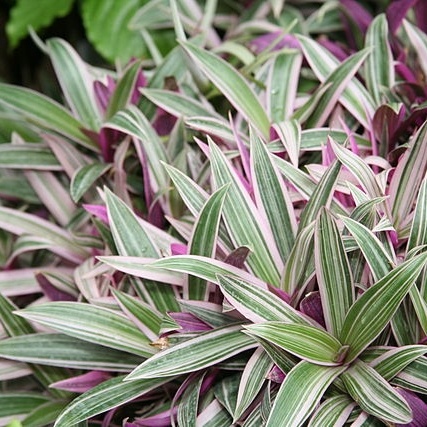
Oyster plant has been widely adopted in Gulf Coast and South Texas commercial landscapes for its stunning foliage and durability. It isn’t native to Texas but handles the region's conditions well.
Once established, it is low-to-moderate in water use and tolerates dry conditions well without heavy irrigation.
Soil Preference
Oyster plant grows well in average, well-drained soil with moderate organic content. It tolerates sandy and rocky soils common to South Texas and handles a range of pH levels.
Sun Exposure and Seasonal Interest
Oyster plant thrives in full sun to partial shade. Its rich burgundy-and-green foliage holds color even in lower light. In intense South Texas afternoon sun, partial shade helps prevent foliage bleaching and leaf tip scorch.
This is mainly a foliage plant, delivering year-round interest through dramatic two-toned leaves. Small white flowers appear through the warm season. In South Texas's mild winters, it stays evergreen.
Sustainability Benefits
This species attracts bees, butterflies, and birds, making it a useful addition to pollinator-friendly landscapes. Its dense foliage also shelters beneficial insects throughout the year.
General Watering Schedule
- Establishment phase: Water every 5–7 days, keeping soil evenly moist but not saturated. Consistent early moisture encourages strong production and full appearance.
- Mature plants: Water every 10–14 days during dry periods. In South Texas summers with regular rainfall, additional irrigation is usually unnecessary.
Oyster Plant Quick Facts
|
Key Point |
Detail |
|
|
1 |
Origin |
Native to southern Mexico, Belize, and Guatemala; not native to Texas. |
|
2 |
Sun & Soil |
Full sun to part shade; average, well-drained soil. Foliage color holds well in lower light. |
|
3 |
Water Use |
Low-to-moderate once established; drought-tolerant. Overwatering is a greater risk than underwatering. |
|
4 |
Pollinators |
Attracts bees, butterflies, and birds; evergreen foliage provides year-round shelter for beneficial insects. |
|
5 |
Planting & Care |
Plant mid-March to April. Water every 5–7 days to establish; every 10–14 days at maturity. Wear gloves when handling (sap is a mild irritant). |
#6. Ixora
Ixora is a tropical shrub native to India, Sri Lanka, and Southeast Asia. In Texas, it’s been widely adopted as a commercial ornamental and performs best in South Texas's USDA Zones 9b–10.
It is moderate in water use, needing regular moisture, especially during hot, dry times.
Soil Preference
Ixora demands well-drained, acidic soil. This is where South Texas presents a challenge. Local soils tend to be alkaline. Avoid planting near concrete foundations or sidewalks, which leach lime and push pH even higher.
Sun Exposure and Seasonal Interest
Ixora thrives in full sun with at least four to six hours of direct sunlight daily. In South Texas summers, a little afternoon shade prevents leaf scorch while still supporting strong flowering.
Year-round blooming is one of ixora's best features. Each flower cluster lasts six to eight weeks, delivering continuous color in red, orange, yellow, pink, or white. Leaves emerge bronze and mature to a glossy deep green.
Sustainability Benefits
Its tubular flowers are made for hummingbirds and butterflies common to South Texas. Once established, it handles dry periods well and tolerates saline irrigation water — ideal for coastal landscapes.
General Watering Schedule
- Establishment phase: Water every 5–7 days, keeping soil evenly moist but never soggy. Always water at the base.
- Mature plants: Deep water once or twice weekly during warm months, reducing in fall and winter as growth slows.
Ixora Quick Facts
|
Key Point |
Detail |
|
|
1 |
Origin |
Native to India and Southeast Asia; not native to Texas. Best in South Texas Zones 9b–11. |
|
2 |
Sun & Soil |
Full sun (4–6 hours). Needs acidic soil. Never plant near concrete. |
|
3 |
Water Use |
Moderate; deep water 1–2x per week. Water at root zone only. Overhead watering invites fungal disease. |
|
4 |
Pollinators |
Attracts butterflies and hummingbirds. Tubular blooms suit South Texas's long-tongued pollinators. |
|
5 |
Planting & Care |
Amend soil with compost or peat moss. Fertilize monthly with acid-forming fertilizer. Prune lightly after bloom cycles. |
#7. Rangoon Creeper
Rangoon creeper is a tropical vine native to Asia. It performs best in South Texas's USDA Zones 9b–11.
Once established, it is low-to-moderate in water use and surprisingly drought-tolerant for a tropical vine.
Soil Preference
Rangoon creeper is forgiving when it comes to soil. A lean-to-moderate fertilizer mix produces steady blooms.
Sun Exposure and Seasonal Interest
Full sun produces the most blooms for this vine when it gets at least 6 hours of direct sunlight daily.
A spring-through-fall bloomer, it peaks during the hottest months. Blooms open white in the evening, shift to pink, then mature to deep red. Flowers carry a sweet fragrance that intensifies at night. In frost-free South Texas locations, it stays evergreen year-round.
Sustainability Benefits
Rangoon creeper is a multi-pollinator plant. Evening white blooms draw hawkmoths and sphinx moths while daytime pink and red flowers attract butterflies, bees, and hummingbirds. It is deer-resistant and thrives in lean soil without heavy fertilization.
General Watering Schedule
- Establishment phase: Water every 5–7 days, keeping soil consistently moist.
- Mature plants: Deep weekly soakings are sufficient. Consistent moisture during the growing season rewards heavier blooms.
Rangoon Creeper Quick Facts
|
Key Point |
Detail |
|
|
1 |
Origin |
Native to tropical Asia; not native to Texas. Best suited for South Texas Zones 9b–11. |
|
2 |
Sun & Soil |
Full sun (6+ hours) for best blooms. Wide pH tolerance and must be well-drained. |
|
3 |
Water Use |
Low-to-moderate once established; drought-tolerant. Deep weekly soakings at maturity. Lean soil means more flowers, less foliage. |
|
4 |
Pollinators |
White evening blooms attract moths; pink/red daytime blooms draw butterflies, bees, and hummingbirds. All three colors often visible at once. |
|
5 |
Planting & Care |
Plant in spring. Water every 3–5 days to establish; taper to weekly at maturity. Use root barriers near hardscapes in Zone 10–11 to control spread. |
#8. Golden Dewdrop
Golden dewdrop is native to tropical America, ranging from Florida through Mexico, the Caribbean, and South America. It earned the 2006 Texas SuperStar Plant designation, reserved for plants that consistently perform well across Texas growing conditions.
Once established, it is low-to-moderate in water use and handles South Texas heat well.
Soil Preference
Golden dewdrop is one of the rare plants that prefers heavier soils. It’s a natural fit for South Texas's alkaline conditions. Well-drained and fertile soil is ideal, but it won't usually decline in imperfect conditions.
Sun Exposure and Seasonal Interest
Full sun to partial shade is the key. Full sun delivers the most prolific blooming, but it holds foliage color well in lower light.
It blooms from summer through first frost, offering a long color window through an extended warm season. Flowers come in light blue, violet, or white. Golden berry clusters follow the blooms, adding a second wave of visual interest.
Sustainability Benefits
This species attracts hummingbirds, butterflies, and fruit-eating birds. It tolerates heavy, alkaline soils without amendment, reducing prep costs.
General Watering Schedule
- Establishment phase: Water every 5–7 days, keeping soil consistently moist.
- Mature plants: Water every 10–14 days during dry stretches. Once established, it handles dry periods with minimal irrigation.
Golden Dewdrop Quick Facts
|
Key Point |
Detail |
|
|
1 |
Origin |
Native to tropical America; naturalized in Texas. Designated a 2006 Texas SuperStar Plant. |
|
2 |
Sun & Soil |
Full sun to part shade. Tolerates heavy, alkaline South Texas soils. Minimal amendments needed. |
|
3 |
Water Use |
Low-to-moderate; drought-tolerant once established. Consistent moisture boosts bloom production. |
|
4 |
Pollinators |
Attracts hummingbirds, butterflies, and fruit-eating birds. Flowers and berries both attract wildlife. |
|
5 |
Planting & Care |
Blooms summer through first frost; evergreen in frost-free zones. Can reach 15 feet, but is easily maintained as a 6-foot hedge. |
#9. Natal Plum
Natal plum originates from the coastal regions of South Africa and is not native to Texas. It is a well-adapted ornamental that thrives in warm, coastal climates similar to South Texas.
Once established, it’s low in water use and notably drought-tolerant. Its impressive salt tolerance makes it especially well-suited for coastal properties.
Soil Preference
Natal plum adapts easily to South Texas soils (sandy, loamy, or rocky) and handles the region's alkaline conditions without heavy amendment. Well-drained soil is the top need.
Sun Exposure and Seasonal Interest
Full sun is best, though it tolerates light shade. Full sun drives the most attractive flowering and fruiting, and it handles reflected heat from hardscapes well.
White, jasmine-scented flowers bloom in spring and summer with sporadic blooming year-round. This plant simultaneously carries flowers and red fruit across all seasons. Foliage is dense, glossy, and dark green year-round.
Sustainability Benefits
Fragrant flowers attract bees and butterflies while the red fruit draws birds. Dense, thorny growth provides natural nesting cover and can double as a security hedge. It supports local ecosystems and isn’t invasive.
General Watering Schedule
- Establishment phase: Water every 5–7 days, keeping soil consistently moist but not saturated.
- Mature plants: Water every 14 days during dry stretches. Supplemental irrigation is minimal once established.
Natal Plum Quick Facts
|
Key Point |
Detail |
|
|
1 |
Origin |
Native to coastal South Africa; not native to Texas. Thrives in South Texas Zones 9b–11. |
|
2 |
Sun & Soil |
Full sun. Adapts to alkaline, sandy, or rocky soils. Minimal amendments needed. |
|
3 |
Water Use |
Low; drought and salt tolerant once established. One of the most water-wise options for South Texas. |
|
4 |
Pollinators |
Fragrant blooms attract bees and butterflies; red fruit draws birds. Thorny growth provides nesting habitat. |
|
5 |
Planting & Care |
Evergreen in frost-free zones. Flowers and fruit appear simultaneously. Doubles as a flowering shrub or natural security hedge. |
#10. Desert Rose
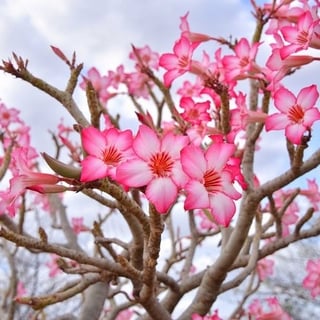
Desert rose originates from arid regions of East Africa, the Arabian Peninsula, and the Sahel. It’s not native to Texas, but is a popular ornamental in warm, dry climates, performing very well in South Texas's hot conditions.
It’s one of the most drought-tolerant ornamentals available in the region. Overwatering is the number one killer, though. Use caution in landscapes frequented by children or animals, as NC St. Extension lists the plant as having low-severity poison characteristics.
Sun Exposure and Seasonal Interest
Full, intense sun is a must. Desert rose needs six to eight hours of direct sunlight daily and thrives in intense heat.
It blooms from spring through fall, peaking during the hottest months. Trumpet-shaped flowers come in vivid shades of red, pink, white, and bicolor. The sculptural, bonsai-like trunk provides striking year-round structural interest.
Sustainability Benefits
The flowers attract hummingbirds, butterflies, and bees across an extended bloom season. Also, the plant is a long-running nectar source during South Texas's hottest months. It can thrive in heat and poor soil with minimal fertilization, and works well as a container plant, allowing mobility during rare freezes. Well-cared-for specimens can last decades.
General Watering Schedule
- Establishment phase: Water every 7–10 days, allowing soil to dry out completely between sessions.
- Mature plants: Water every 14–21 days during the growing season. In winter dormancy, watering can be reduced to once a month or less.
Desert Rose Quick Facts
|
Key Point |
Detail |
|
|
1 |
Origin |
Native to East Africa and the Arabian Peninsula; not native to Texas. Best in Zones 9b–11. |
|
2 |
Sun & Soil |
Full sun (6–8 hours). Fast-draining sandy or gritty soil. Clay requires amendment or raised beds. |
|
3 |
Water Use |
Very low; drought-tolerant. Overwatering is the #1 killer. |
|
4 |
Pollinators |
Tubular blooms attract hummingbirds, butterflies, and bees spring through fall. |
|
5 |
Planting & Care |
Semi-dormant in winter; recovers fast in spring. Best in containers for freeze mobility. Has low severity poison characteristics. |
Conclusion
Those ten South Texas plants are a great list to keep handy for commercial landscapes in cities such as San Antonio, Corpus Christi, and McAllen.
If you have site-specific questions about the plants above, contact Yellowstone Landscape today for a consultation.