
If you ask any coach what makes a great field, you'll often hear the same answers. Firm footing, true ball roll, and no soggy spots the day after heavy rain.
Getting those results takes more than a commercial mower and a weekly visit. Sports field maintenance services focus on the playing surface itself. That involves turfgrass health, player safety, and how each sport wears down a field over a season. It's specialized work that gets results you want in every game.
So which athletic field services do schools typically need?
Most K–12 districts and colleges rely on this core list:
- Mowing at sport-specific heights
- Fertilization and weed control
- Aeration and overseeding
- Irrigation checks and repairs
- Field lining and marking
- Safety inspections
- Spot repairs to heavy-use areas (e.g., goal mouths and base paths)
Synthetic turf needs a different routine. Think grooming, infill top-ups, seam checks, and regular cleaning.
It also helps to sort your school and campus field care by timing. Routine care should happen weekly during the season, but seasonal tasks like aeration fit into weeks between sports. Renovation is the big stuff, such as regrading, new sod, or drainage fixes.
At Yellowstone Landscape, our crews can help you identify when a field has moved past maintenance and into renovation territory. Feel free to save the “scorecard” below as it shows things you should look for in a sports field maintenance provider. Then we’ll go into detail about common problems, player safety, drainage, and the right service approach.
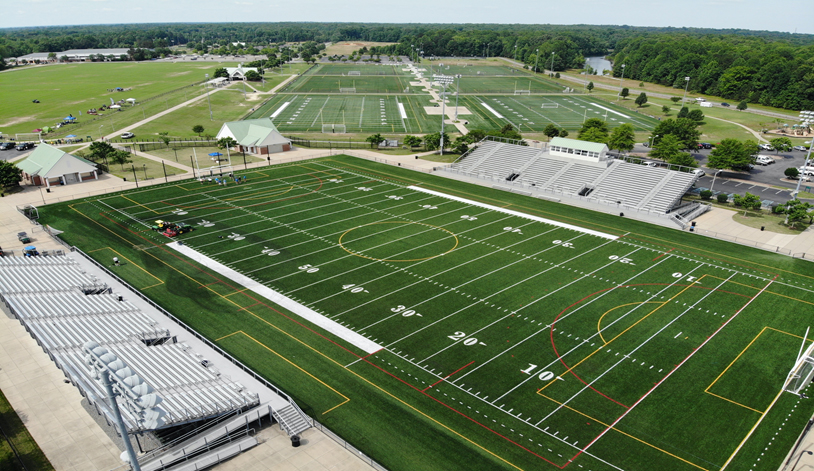
Sports Field Maintenance Provider Scorecard
|
Evaluation area |
What to look for or ask potential providers |
Score (1–5) |
Notes |
|
References from K–12 schools, colleges, or similar institutional properties |
|||
|
Service coverage |
A clear list of included services, exclusions, and extra charges |
||
|
Turf safety |
Written inspection procedures, repair reporting, and a process for flagging unsafe conditions |
||
|
Drainage and playability |
A field assessment that identifies problem areas and explains proposed improvements |
||
|
Multi-sport scheduling |
A maintenance plan that accounts for practices, games, PE classes, and events |
||
|
Staffing and equipment |
Identified crew responsibilities, suitable equipment, and backup coverage |
||
|
Communication |
A named contact, regular reports, and clear response expectations |
||
|
Pricing and accountability |
An itemized proposal, defined service frequency, and measurable commitments |
||
|
Total |
Maximum score: 40 |
/40 |
Why Do Schools and Sports Facilities Struggle With Consistent Field Maintenance?
A field can look great at the first home game and be in mediocre shape between the hashes by October. If that sounds familiar, just know you're not alone.
Four things cause sports facilities to struggle with consistent field maintenance:
- Small crews trying to cover too many acres
- Aging or shared equipment
- Budgets set a year or more in advance
- Sports schedules with no room for turf recovery
Each one can make the others worse. For example, a short-staffed crew usually falls behind on aeration. Or worn equipment breaks down in the middle of a busy season. And when the budget is locked in, a surprise repair means key services won’t get done.
“Adequate drainage not only prevents rain-outs; it can also prolong a field’s life.” ~NC State Extension
Then there's the issue of the same athletic field hosting football, PE classes, band practice, youth leagues, and graduation. Every use is another round of wear and tear. Turf needs downtime to recover, and many school playing fields never get it.
Planning needs often change with the property, too. K–12 districts often stretch one grounds crew across several campuses. Colleges manage more fields with higher stakes, since athletic facilities play a part in recruiting. Larger institutional properties juggle rentals and events nearly year-round. That makes institutional grounds management a tough balancing act.
Before you decide what services to outsource, take an honest look at your current program. Ask your staff a few questions:
- Which fields draw the most complaints?
- What tasks keep getting pushed back?
- Where does our equipment fall short?
- How much staff time do fields pull from the rest of the campus?
The answers show you exactly where problems are. That's where a commercial provider should start because top-notch sports facility maintenance takes up the slack by supporting the work your team already does well.
Athletic Field Safety: What Makes a Surface Safe?
No maintenance program can stop every injury. Players are going to collide, twist, and fall. What a good maintenance program can do is find and fix hazards that make injuries more likely.
So what makes it hard to keep athletic field turf safe? For one, conditions change fast. One rainy week of practice can tear up a goal mouth. Summer heat can harden a surface in a few days. And small damage piles up in the same high-traffic zones, game after game.
That's why regular inspections matter, and a professional walk-through checks for:
- Thin or bare turf
- Holes and divots
- Uneven or sunken spots
- Worn areas near benches and goals
- Rocks, glass, or broken sprinkler parts
- Hard, slick, or waterlogged surfaces
Every inspection should be logged, along with each repair and the date it was completed. Ask your provider how they handle urgent issues. A clear escalation process means a dangerous hole gets reported fast, and long before the next practice.
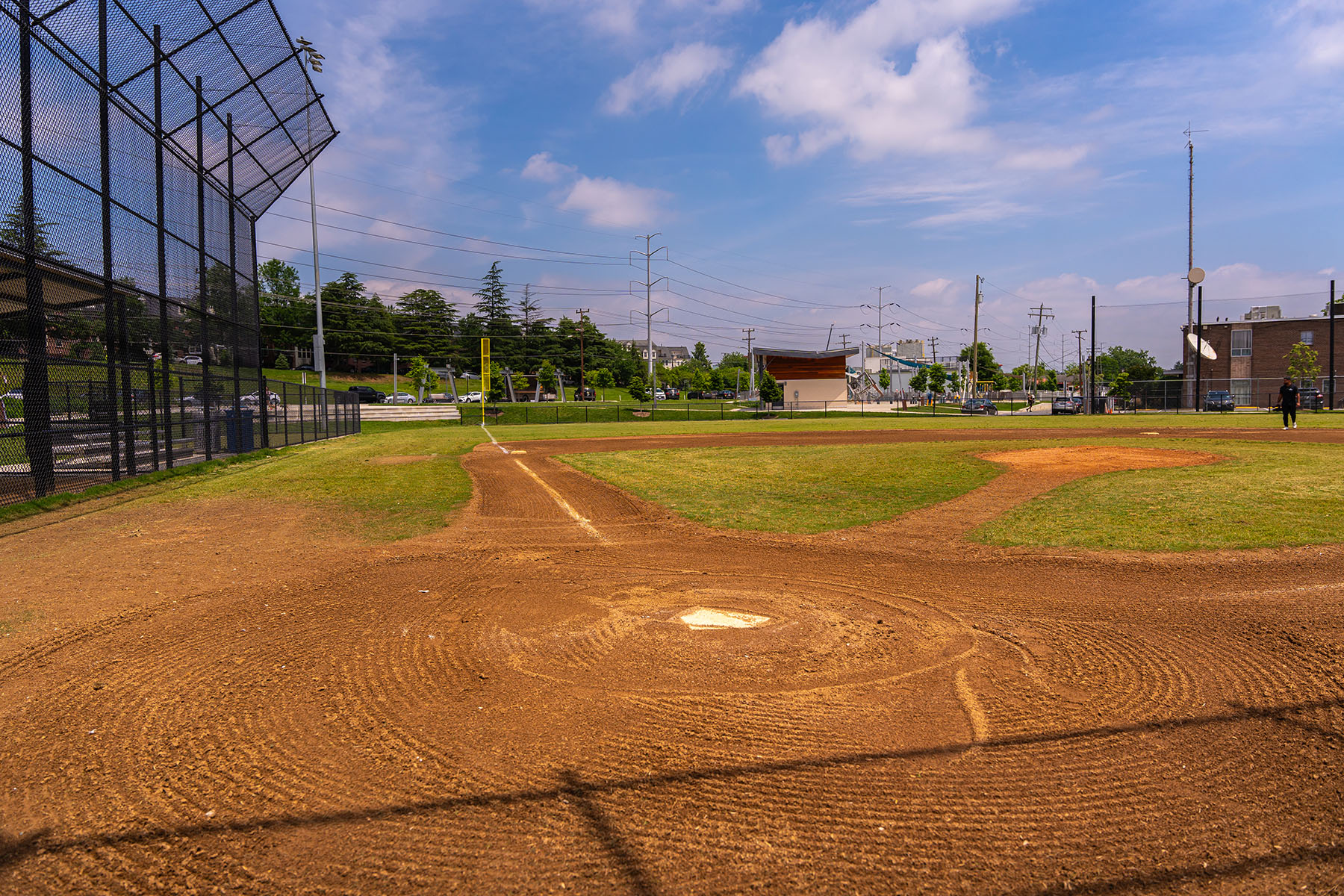
Who Decides When a Field Closes?
That call belongs to the school or facility, usually an athletic director or facilities manager. Your landscape provider’s job is to report conditions accurately and recommend action. You’ll want their process in writing so nobody has to guess what to do during a rainout. The same written plan should cover when a field reopens for play.
Keep in mind that a visual check only goes so far. Professional testing measures what the eye cannot, like surface hardness and traction. Synthetic fields often need hardness testing, commonly called G-max testing. Some sports and leagues also set their own surface standards, so confirm which ones apply to your sports fields.
Strong athletic turf safety comes from that mix of trained eyes, good records, and well-kept data. It's the foundation of responsible school and campus athletic field care.
Sports Field Drainage and Playability
Excess water is the fastest way to lose a game day. A field that holds puddles two days after a rainstorm costs you practices, games, and damaged turf.
Start by writing down what you see (before any provider walks your property):
- Standing water and how long it lasts
- Wet spots that return after every rain
- Soft or uneven footing
- Games and practices lost to weather
Dated photos help. They give a provider evidence to work from and give you a way to measure their progress.
Most drainage trouble traces back to the same few sources, which could be:
- Heavy clay soil holding water.
- Constant play compacting the surface until rain can't soak in.
- A field that’s lost its crown lets water pool in the middle.
- Old or clogged drain lines that can't keep up.
- Overwatering, which compounds other issues.
But how do professional sports field maintenance services improve drainage and playability? A lot of it comes from routine work. Core aeration loosens compacted soil, while sand topdressing builds a better surface over time. Smarter irrigation scheduling prevents waterlogging before it starts becoming a problem.
Some fixes are bigger, though. Regrading an athletic field or installing new drain lines are large projects that might need their own budget. A good commercial landscaper or field maintenance provider will tell you which category your problem falls into, so you can plan for it.
At Yellowstone Landscape, we judge field drainage and playability by two things. Is the surface consistent from sideline to sideline? And does it suit the sport played on it? A soccer pitch needs a smooth, true roll. A baseball infield needs firm, even footing. When the field matches the sport, athletes can play safely and with confidence.
What Maintenance Approach Works Best for Multi-Sport Fields?
Picture one field hosting soccer in the fall, lacrosse in the spring, and PE classes every weekday in between. A generic maintenance plan is not a great plan on a field like that.
But a plan built around your school’s or rec department’s schedule is a great plan.
Start by asking for a field-by-field maintenance calendar that shows:
- Which sports use each field and when
- Mowing, fertilization, and aeration dates
- Dates for games and tournaments
- Recovery windows between seasons
- Who handles markings for each sport
Timing is everything, as seen with mowing, which should happen outside class hours and practice times when possible. Heavy work like aeration and overseeding can be done between sports seasons, because that’s when grass has time to recover. Tournaments usually call for touch-ups the week before and repairs right after.
Keep a close eye on high-use zones, though. Goal mouths, center circles, and practice areas take the most abuse. Rotating team drills to different parts of the field is one way to spread that wear around, and your turf care provider can recommend where to shift activity.
Markings need a clear agreement too. When football lines overlap soccer lines, confusion will follow. Decide up front who paints, who sets up goals and nets, and how much notice the maintenance crew needs before a field changes sports.
Good sports facility maintenance keeps every team on schedule without shortchanging the turf. That coordination is the heart of reliable school and rec department athletic field care.
In-House vs. Outsourced Sports Field Maintenance
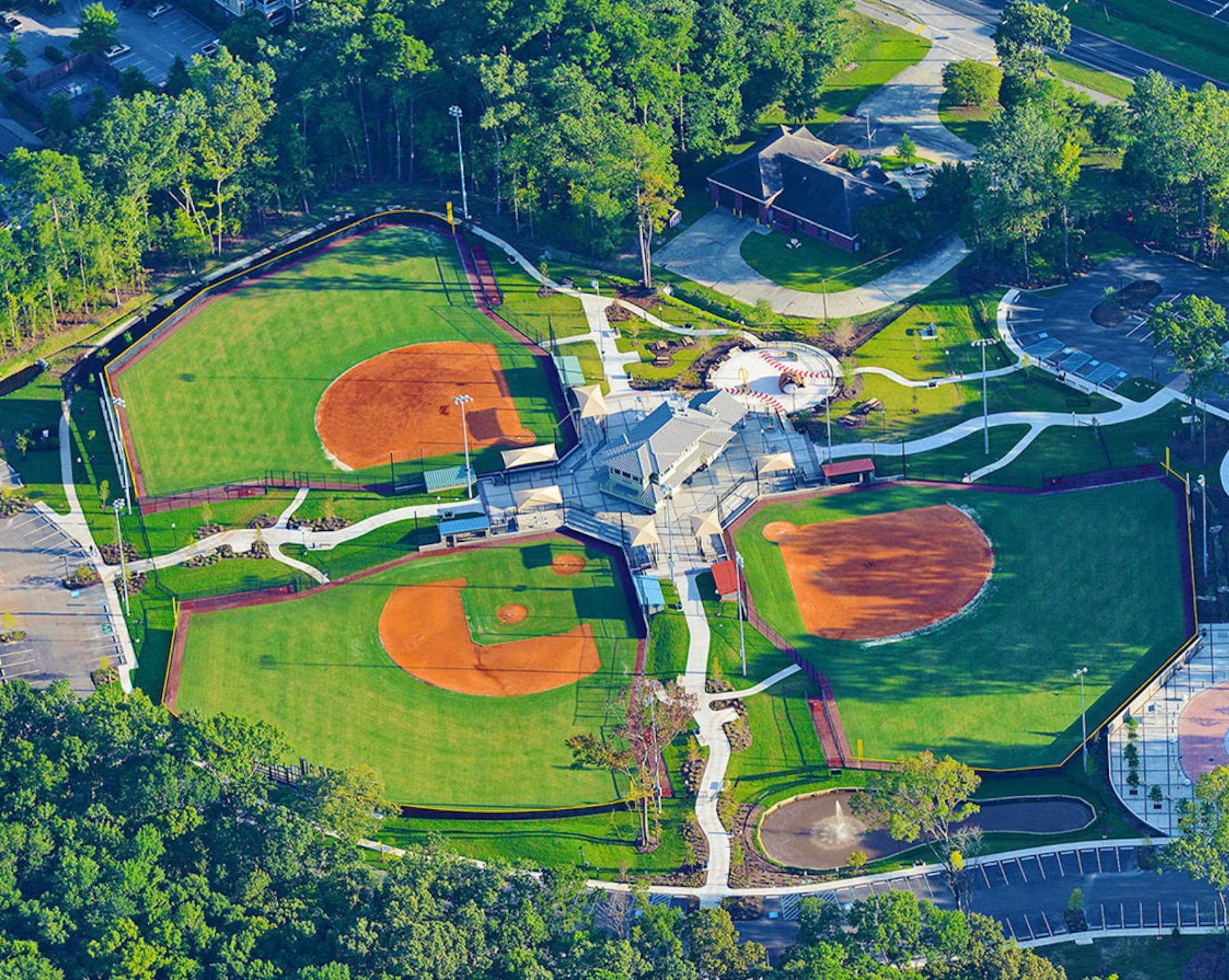
Most schools land in one of three places with in-house vs. outsourced field care. Some keep everything in-house. Some hand it all to a provider. Many choose a hybrid that’s a balanced approach where their own staff handles daily care and a partner takes on specialized work like aeration, fertilization, and renovation.
To compare your costs wisely, add up the full picture:
- Staff wages and benefits
- Equipment purchases and repairs
- Fertilizer, seed, sand, and paint
- Specialist work you already contract out
- Unplanned repairs
That last one on the list (unplanned repairs) tends to surprise people. A broken irrigation main or a torn-up field after a wet tournament can wipe out a year's savings.
“Poorly maintained playgrounds or athletic fields can become hazardous, posing safety risks to children.” ~National Recreation and Park Association
Whichever model you choose, every task needs to have a clear owner:
- Who inspects the fields?
- Who adjusts irrigation?
- Who reports problems, and who responds when something breaks on a Friday night?
It’s a good idea to write those answers into your scope of work. A strong scope lists each field, each service, how often it happens, and how results get reported. It should also spell out exclusions and what triggers an extra charge, so a storm repair doesn't arrive with a surprise invoice.
Finally, ask how the provider will work alongside your grounds staff. Outsourced field maintenance works best as a true partnership. Clear roles make institutional grounds management easier for everyone involved.
Conclusion
The right partner makes everything in this guide easier. Use a checklist during bid reviews and interviews.
Does the provider have:
- Experience with K–12, college, or institutional fields
- A clear field assessment and maintenance calendar
- Enough staff and equipment for your property
- References from fields with similar surfaces and use
- A process for documenting conditions and flagging safety issues
- A plan for weather delays and storm damage
Then compare every bid against the same scope, service frequency, exclusions, and performance expectations. Otherwise the cheapest proposal can turn out to be a big letdown.
And don’t forget to use our provider scorecard at the top of this post. Just copy and paste it to have on hand at your next sports field maintenance bid review.
And if you want a proven company with close to 20 years’ experience in sports field services, let us take a look at your fields. Contact Yellowstone Landscape to schedule a sports field assessment.
FAQ
How much do sports field maintenance services cost?
Cost depends on the number of fields, turf type, how often they're used, and which services are included. A single practice field needs far less than a multi-field complex hosting games year-round. The best way to compare is to request bids built on the same scope of work and service frequency.
How often should athletic fields be aerated?
Most high-use natural grass fields benefit from core aeration two to three times a year. Fields with heavy compaction or poor drainage may need more. Schedule it between seasons so the turf can recover before play.
How often should a sports field be mowed?
During peak growing season, many game fields are mowed two to three times a week. Mowing height depends on the sport and grass type. Frequent mowing keeps the turf dense and the playing surface consistent.
What is the best grass for athletic fields?
It depends on your region’s climate. Bermudagrass is the go-to choice across the South because it handles heat, recovers quickly, and stands up to heavy traffic. Cooler regions often use Kentucky bluegrass or perennial ryegrass blends.
Do synthetic turf fields need maintenance?
Yes. Synthetic fields need regular grooming, infill top-ups, seam repairs, and cleaning. Many also need periodic hardness testing to confirm the surface is safe for play. Skipping upkeep shortens the life of the field.
When does a sports field need renovation instead of maintenance?
Renovation makes sense when routine care can't fix the underlying problem. Common signs include standing water that won't drain, a lost crown, widespread bare areas, or an uneven surface. A field assessment will show whether targeted repairs or a full renovation is the better investment.
Can a commercial landscaping company maintain school athletic fields?
Yes, as long as it has verified sports turf experience. Ask how their crews are trained in athletic field care, whether they have the right equipment, and which K–12 or college clients they currently serve. Yellowstone Landscape maintains numerous athletic fields as part of our commercial landscape services (see this case study).


.jpg?width=400)